Clear objectives and conversion funnel
Campaign architecture linked to margin, offer and the purchase cycle.

We combine strategy, media buying, creativity and measurement so that every test yields insights and every insight brings us closer to the next conversion.
We’ll tell you what works, what doesn’t, and what we’d do first. Authority is demonstrated through decisions and results.
Campaign architecture linked to margin, offer and the purchase cycle.
Configuring and reviewing events to optimise performance in a cookie-free environment.
Prospecting, remarketing and exclusions with a defined function.
Messages and formats designed to help people learn, not just to pad out campaigns.
Budget, bids and structure tailored to the business’s actual performance.
Hypotheses, variables and clear criteria for deciding what to retain or discard.
A comprehensive analysis of the advert, landing page, offer and conversion friction points.
Results, decisions and next steps explained without vanity metrics.
A system designed to help you learn faster, protect your investment and link every decision to the business.
We choose the objective and format based on the role they are intended to play within the funnel, not on the basis of trends or availability.
Use it to broaden your reach, build brand awareness or present a new proposal before asking for a conversion.
Use it when you need to drive qualified audiences to a specific piece of content, landing page or experience.
Use it to generate leads when there is a clear proposition and a subsequent qualification process.
Use it when purchase attribution is reliable and there is sufficient volume to optimise for conversions.
Use it to regain engagement, personalise products and engage audiences who are already familiar with the brand.
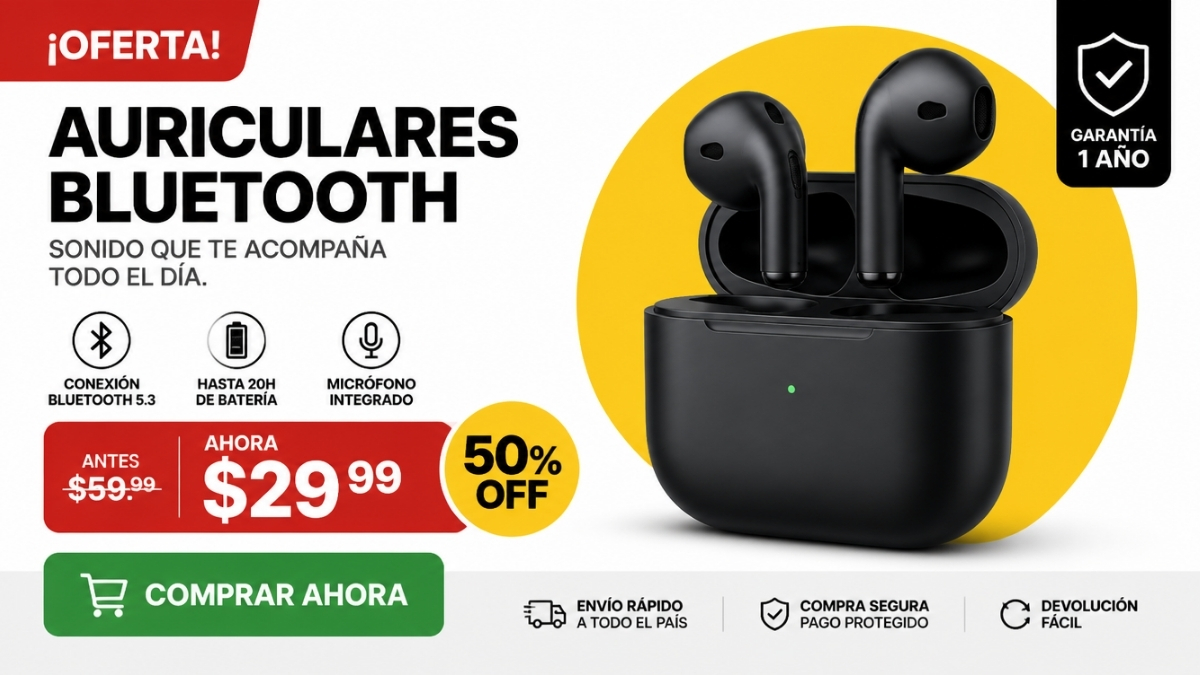
A direct message, a clear structure and easy to read.
When to use it: simple offers, a recognisable product or rapid concept testing.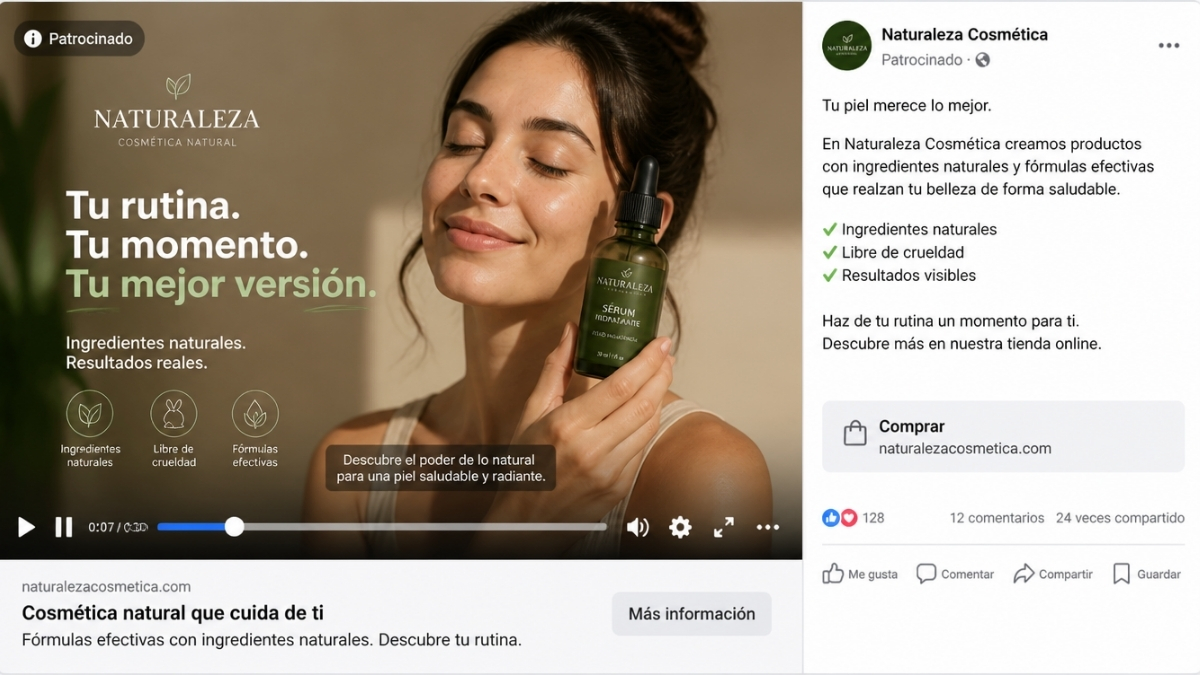
Demonstration, context and narrative all in one piece.
When to use it: to explain value, demonstrate usage or build social proof. Always include controls and a clearly visible alternative.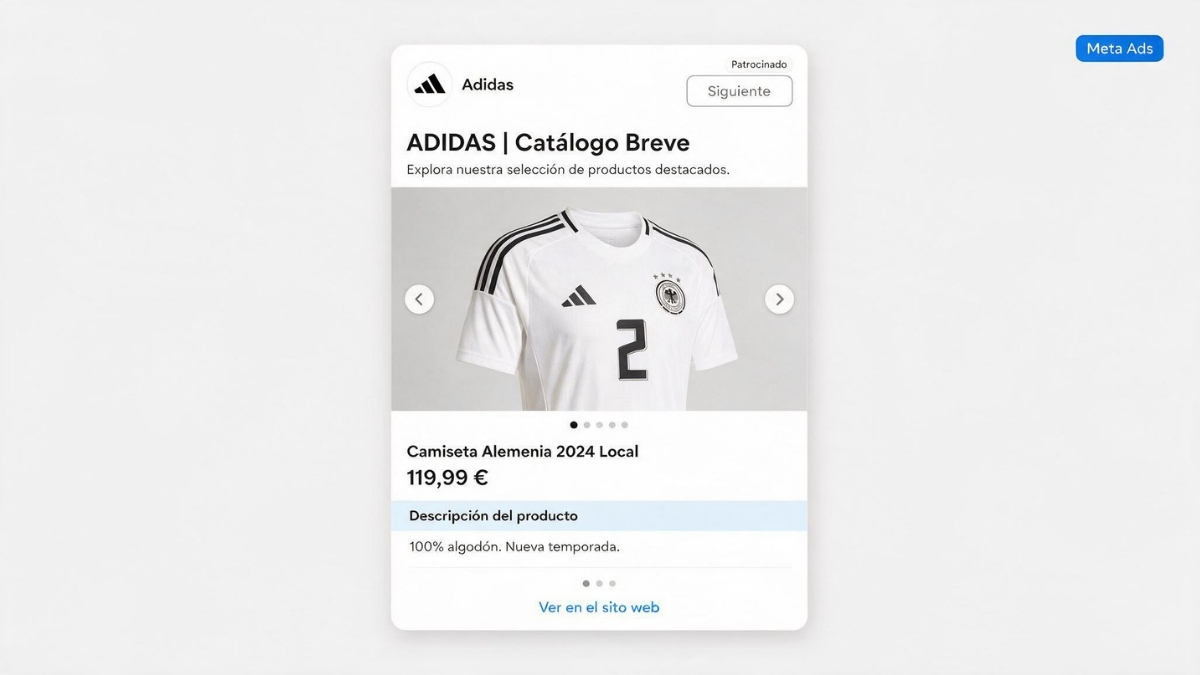
Several ideas, products or steps within the same unit.
When to use it: short catalogues, sequential benefits or comparisons.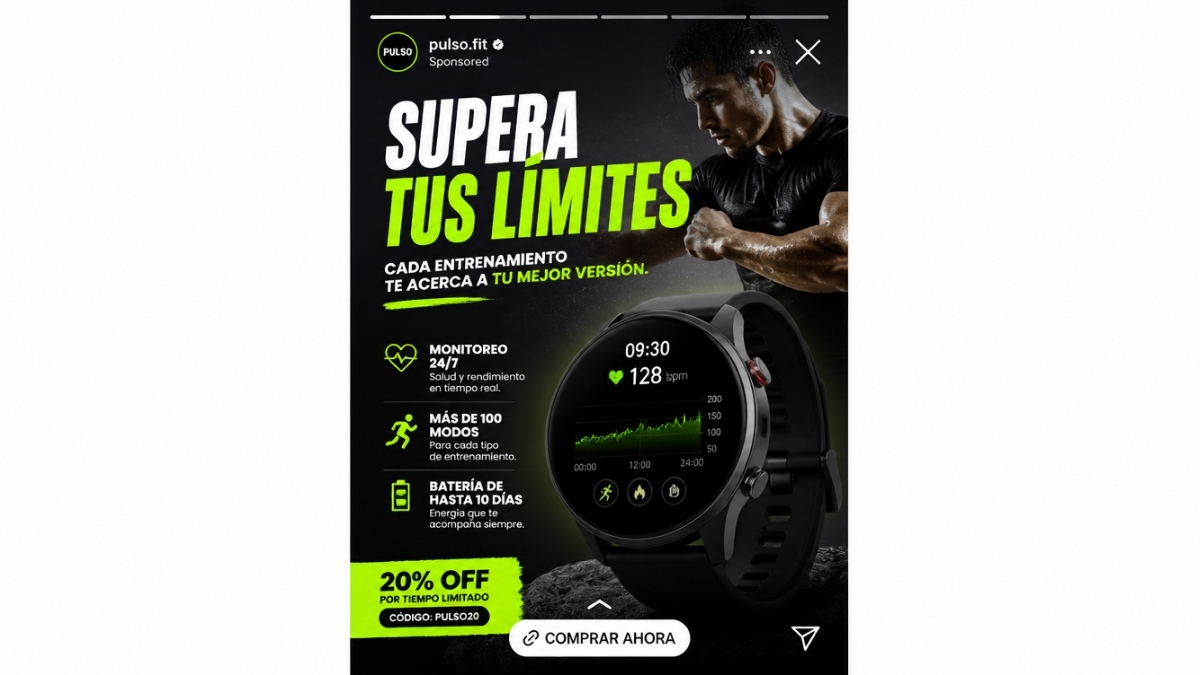
A vertical format designed for mobile use and quick reading.
When to use it: agile demonstrations, native content or visually striking messages.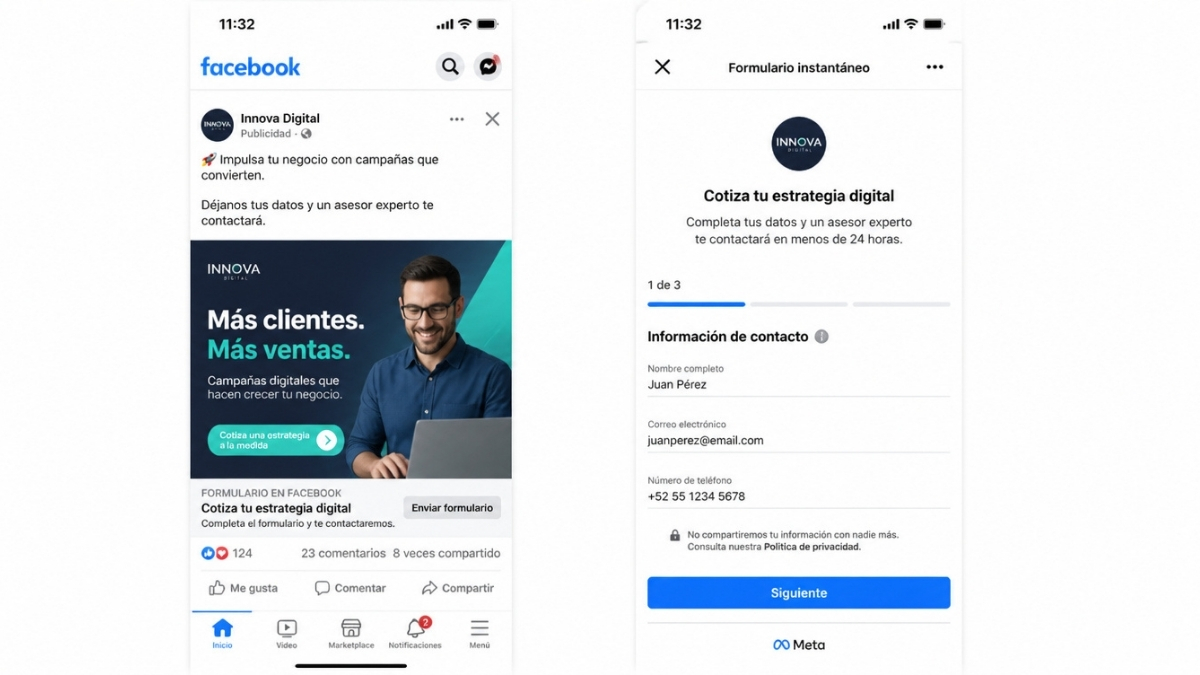
User acquisition within Meta with less navigation friction.
When to use it: lead generation where speed is of the essence and leads are qualified at a later stage.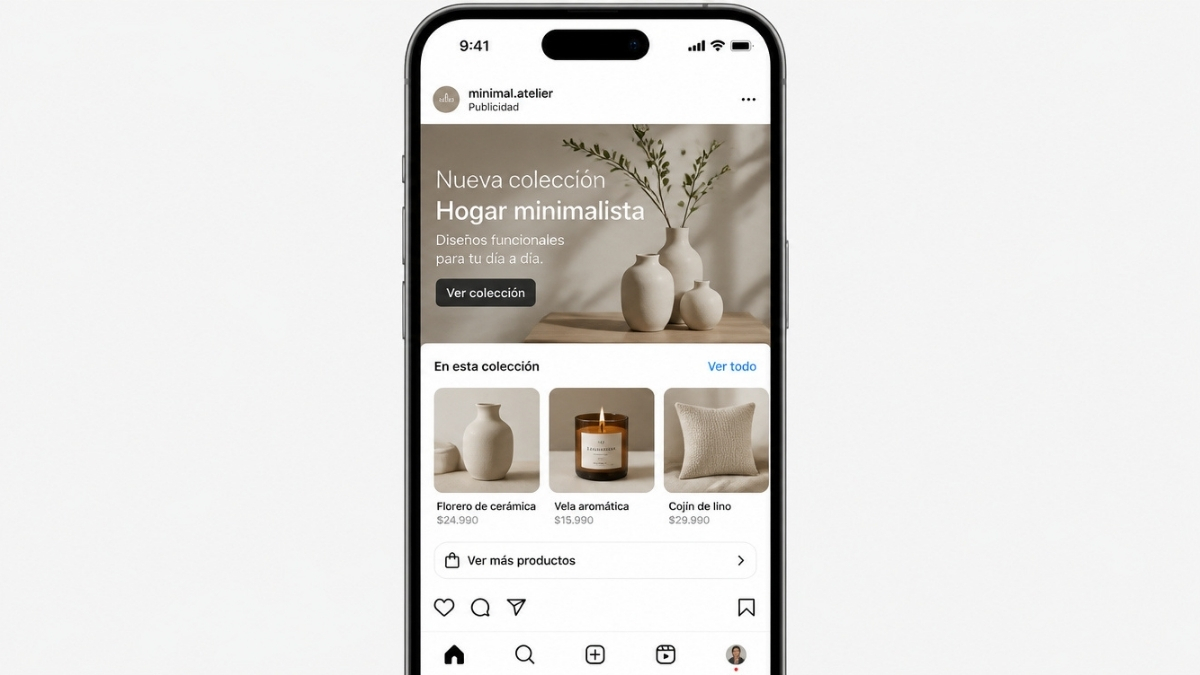
Key creative content and a browsable catalogue in an immersive experience.
When to use it: e-commerce, product discovery and mobile shopping.A repeatable system for diagnosing, prioritising, implementing and improving, without wasting time on vanity metrics.
We define the angle, the audience, the offering and the sign of success.
Comparable concepts and formats, with agreed production arrangements.
Sufficient memory and a sufficiently long time window to obtain a valid reading.
We break down the impact by angle, format, audience and placement.
We build on our successes and put what we’ve learnt to good use – not just tired old adverts.
Specific cases where strategy, creativity, media and measurement all worked towards a single objective.
qualified leads
Paid media, SEO, CRO and CRM integrated, with a 15% reduction in the cost of acquisition.See case study
advertising impressions
Programmatic advertising, paid media and CRM to engage a community of travellers and drive traffic to the shop.See case study
qualified leads
Digital customer acquisition, creativity and audience optimisation using the D-Growth methodology.See case studyThe strategy isn’t siloed between departments: channel, data, creativity and conversion all share priorities and decisions.

Turn business objectives into priorities, hypotheses and an actionable roadmap for the entire sales funnel.

Manages the structure, testing and optimisation of campaigns, with a focus on efficiency and learning.

Bring together demand, architecture and content to build meaningful visibility and organic growth.

Design messages and experiences that reduce friction and help you make the most of every opportunity.
If your case requires further context, we’ll discuss this during our first conversation.
The strategy, concept and component requirements are all part of the work. The volume and production are agreed upon depending on the scope.
Yes, provided the project and the infrastructure allow it. First, we check for events, consent and signal quality.
When there is sufficient momentum, creative stability and a unified economy capable of supporting further investment.
It depends on friction, qualifications and the sales cycle. We can use both and compare quality, not just volume.
It depends on the market, the objective and the expected cost per result. Before setting a figure, we check whether there is sufficient budget to generate useful insights.
The frequency depends on the volume, the audience and signs of fatigue. We work with a data-driven system of hypotheses, variations and renewal.
We link Meta events to analytics and, where scope allows, to the CRM to distinguish between submitted forms and genuine opportunities.
Yes. We can work on catalogue listings, dynamic remarketing, purchase tracking and sales campaigns, provided the feed and tracking are of a sufficiently high standard.
Tell us about the challenge, the starting point and the level of investment. We’ll filter the options quickly so as not to waste your time.
Useful content, with no endless feed or distractions. Diagnosis remains the main focus.

What to check in terms of the concept, the message and the creative execution before increasing the budget, bids or audience reach.

How to distinguish between the conversions that Meta actually generates and those that would have happened without the campaign.

How to link offline sales and opportunities with Meta to improve attribution, learning and campaign optimisation.